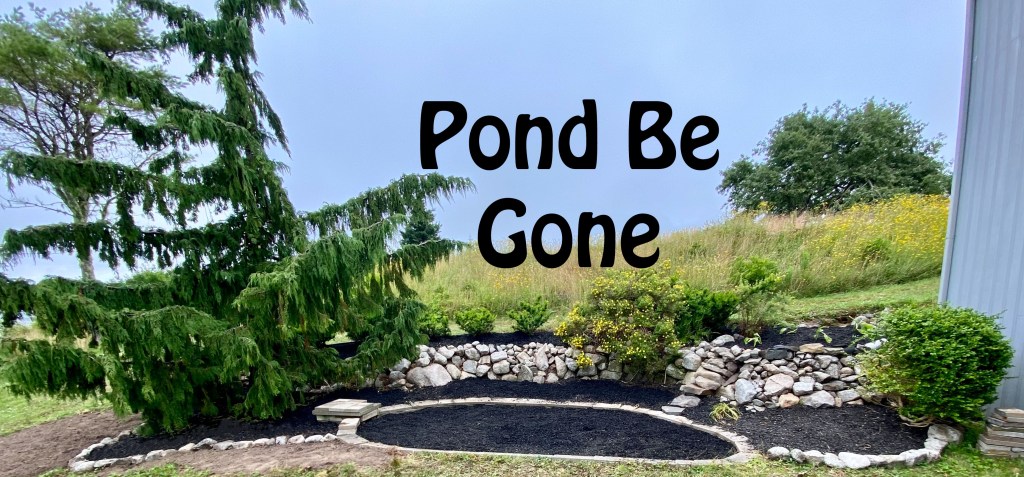
Sometimes we inherit a ‘feature’ that just isn’t a feature for us. Such was the case with this pond. If you want a pond it can be a beautiful and interesting feature of your property. If you don’t it can quickly turn into an eyesore but also a health and safety concern. In my experience most homeowners that inherit a pond with a new home would rather see it go than stay. One great option for getting rid of a pond is to turn it into a garden instead!
Pond upkeep
If a pond is in decent shape there is still a lot of upkeep involved. Every year you will have to remove all the leaves and other organic matter that has fallen in over the previous year. In my experience the best way to do this really is to get in once the weather warms up. Typically one species of aquatic plant takes over the pond every season and you will likely have to remove the majority of last year’s growth each year. It is also a good idea to drain and replace a significant portion of the water as well.
If a pond’s upkeep has been neglected the job gets much larger. It will be necessary to drain the pond completely and remove most if not all of the material with in. Water lilies in particular produce a staggering amount of root material. In this pond over half of the volume of the pond was lily rhizomes. Even after your fresh start you will still be committed to ongoing pond maintenance every year going forward.
Ponds can be a safety hazard
An overgrown pond can certainly be a bit of an eyesore and they tend to smell a bit like a swamp but they can cross the line into being dangerous as well. A neglected pond on your property is essentially an unmanaged area of standing water. Standing water presents a risk for drowning, particularly for children, and is a breeding ground for mosquitoes.
A pond can also be considered an attractive nuisance on your property. An attractive nuisance is a hazard that actually encourages people, especially children, to trespass to investigate. An attractive nuisance includes things like pools, old sheds, treehouses and dangerous animals. They are man made features that are likely to attract attention and pose an inherent danger as well. If someone is trespassing to investigate an attractive nuisance on your property and they get hurt you could very well be held liable. If you have an attractive nuisance on your property it is your responsibility to restrict access to it. This is the reason pools are required to be fenced in almost all jurisdictions.
The best option can be getting rid of a pond
If you don’t love your pond or aren’t interested in doing or paying someone to do the upkeep the best option is to get rid of it. This can be accomplished by digging the whole structure out or in some cases filling it in. If feasible the easier option is often to fill it in rather than emptying it entirely and removing the liner.
We opted to fill in this pond rather than remove it entirely for a few reasons. Filling it in and turning it into a garden wouldn’t require bringing in heavy machinery, there was lots of lawn area already and the area around the pond was already a garden! If you are considering turning your pond into a garden you must consider the following:
- The water source feeding the pond
- Fill material
- Existing edging
- Garden/pond location
- Remaining infrastructure
- Drainage in that location
This pond conversion
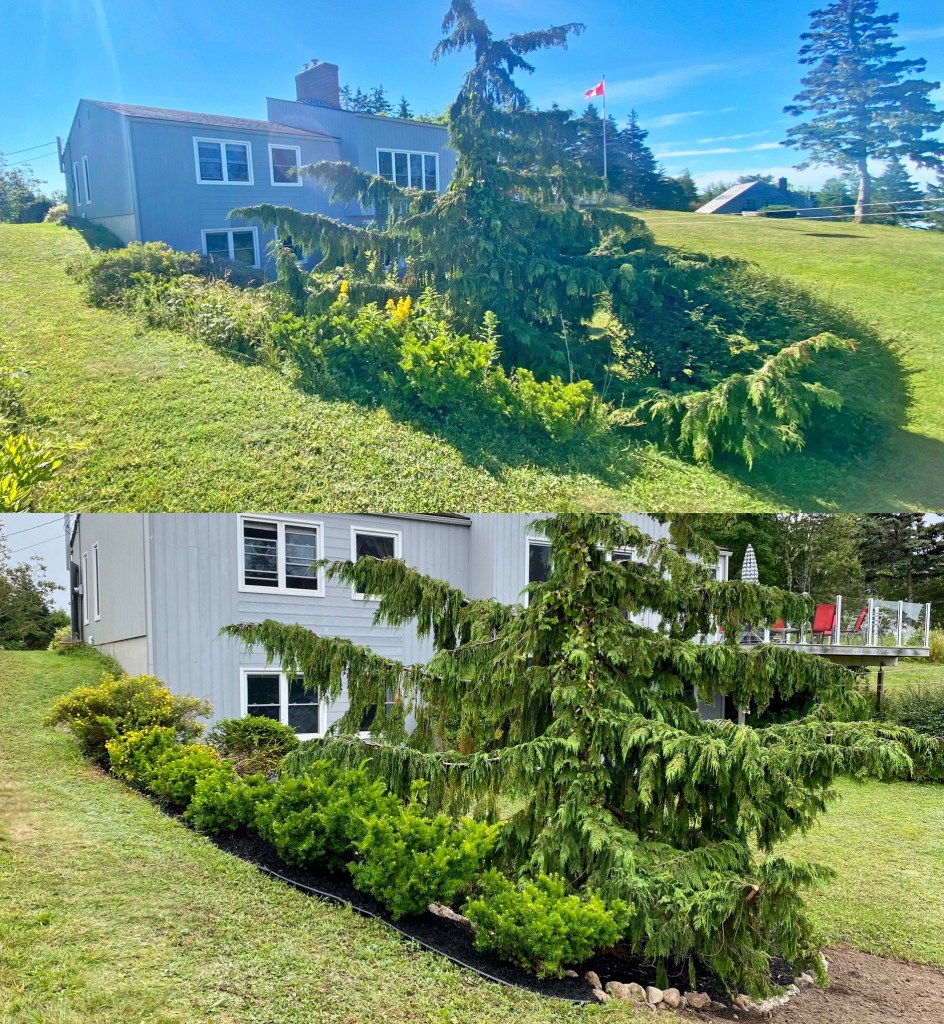
This particular pond was surrounded on three sides by an existing garden with a gorgeous cypress tree thriving against all odds. Because of the smelly, murky and soupy pond the garden had been untouched for about 10 years and was badly overgrown. To be fair though, getting the garden back into shape was almost impossible given the state and location of the pond.
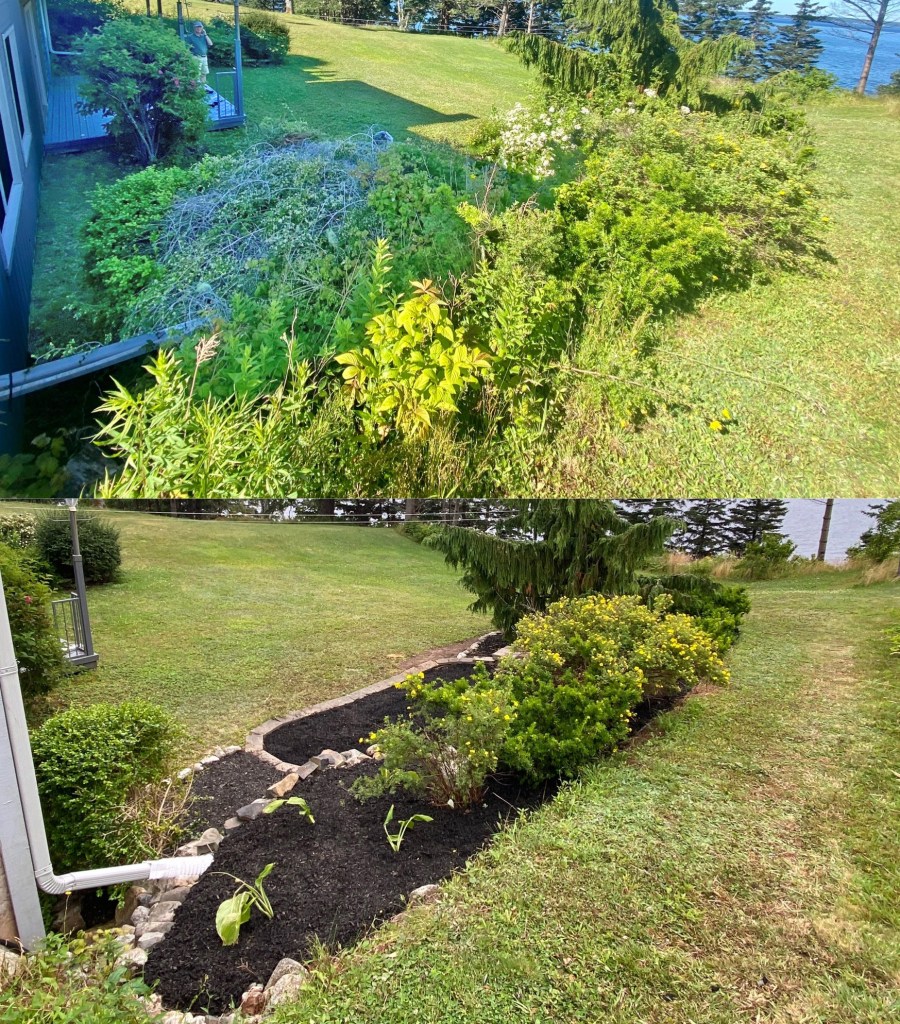
This pond wasn’t actually very large and was fed by the rain gutter from the back half of the house. There was an overflow built on the far side and concrete tiles served as the pond edging. If we were to fill in the pond and turn it into a garden it would fit right in. These were the steps I took to get rid of this pond:
- Remove overgrown bushes and plants in garden and pond
- Remove damaged edging material to bring level with lawn
- Replace damaged concrete pavers
- Rebuild surrounding damaged rock wall
- Remove plant material below the water line
- Remove most of the rocks on top of the liner
- Cut several large holes in the pond liner
- Wait for a heavy rain to check for appropriate drainage
- Re-route rain gutter appropriate for a garden
- Install barrier layer and fill with garden soil
- Lay barrier and black mulch
- Clean up and define edges of the new garden
- Seed the areas of reclaimed lawn
Wile this work was in progress I waited for a heavy rain or two to ensure that there was sufficient drainage in the new garden to deal with the run off from the roof. Typically ponds have a water source from either a gutter or underground drain that is meant to keep the pond full. It is important not to skip this step as you don’t want your new garden to be a soupy mess. If you have too much water after a rain you will need to make more holes or cuts in the liner.
The overgrown bushes had actually crowded out and damaged the existing pontilla and boxwood. We opted to keep these damaged plants in place and see how they recover with a bit more personal space over the next few years. They can always be removed later if they still fail to thrive! I also hid most of the rerouted gutter and built a little waterfall into the garden to deal with the outflow from the rain gutters.

This new garden didn’t get planted right away after being converted from a pond. With high quality permanent barrier installed throughout the entire garden weeds won’t be an issue going forward. Instead the homeowner decided to wait for inspiration to strike and leave some space to move plants she loved from other overgrown gardens we will be working on next year!
If you have a pond and don’t have the desire for one or the upkeep that goes with it, your best option will be to get rid of it. For many ponds the easiest, mot cost effective option might be to turn your existing pond into a garden. Do you have a pond that is past its prime or presents a potential hazard on your property? If so get in touch and we would be happy to take a look!
 AMK Landscaping
Leave a comment