When it comes to walkways and patios a homeowner has always had three great options. Those are concrete pavers, poured concrete and natural stone like flagstone. While each gives a very different look natural flagstone looks great in more rural settings, particularly on the water.
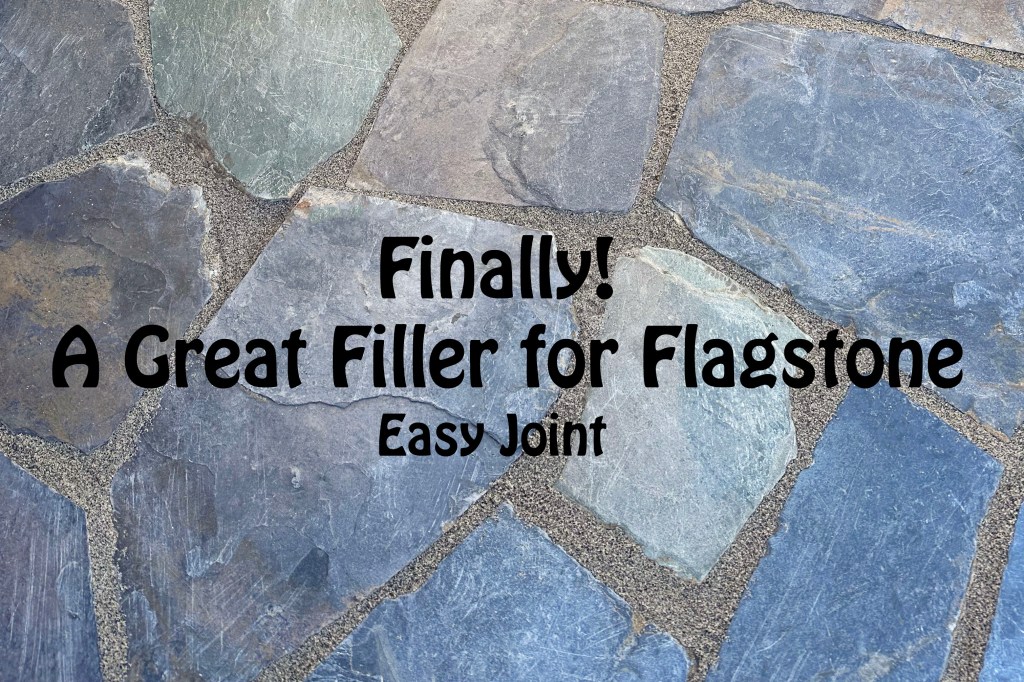
What is flagstone?
Flagstone in general, is sedimentary rock split into layers. Depending on the location it might refer to sandstone, quartzite or other types of rock. The color and texture of the stones will also depend on where it was quarried. In Nova Scotia, flagstone is most often blue in color and made of highly irregular edges and sizes.
When buying flagstone from a supplier you will typically have a range of grades to choose from. The more affordable the stone the more the size, thickness and color will vary on the pallet. When laid flagstones can either be cut into more regular tight-fitting shapes or laid as they come with larger spaces.
When cut and laid tight the joint size between stones is typically quite small and the edges can be made perfect. When stones are cut joints can be kept under one inch and traditional polymeric sand can be a suitable choice for filling the gaps.
More commonly flagstone is laid ‘as it comes’ even if the edges are cut to form a regular border. This installation method leads to a beautiful more natural look but the width of the gaps between stones can vary from almost nothing to well over an inch. Though polymeric sand has been used in these installations for years it is difficult to keep it in place and looking its best.
Filling the gaps in Flagstone
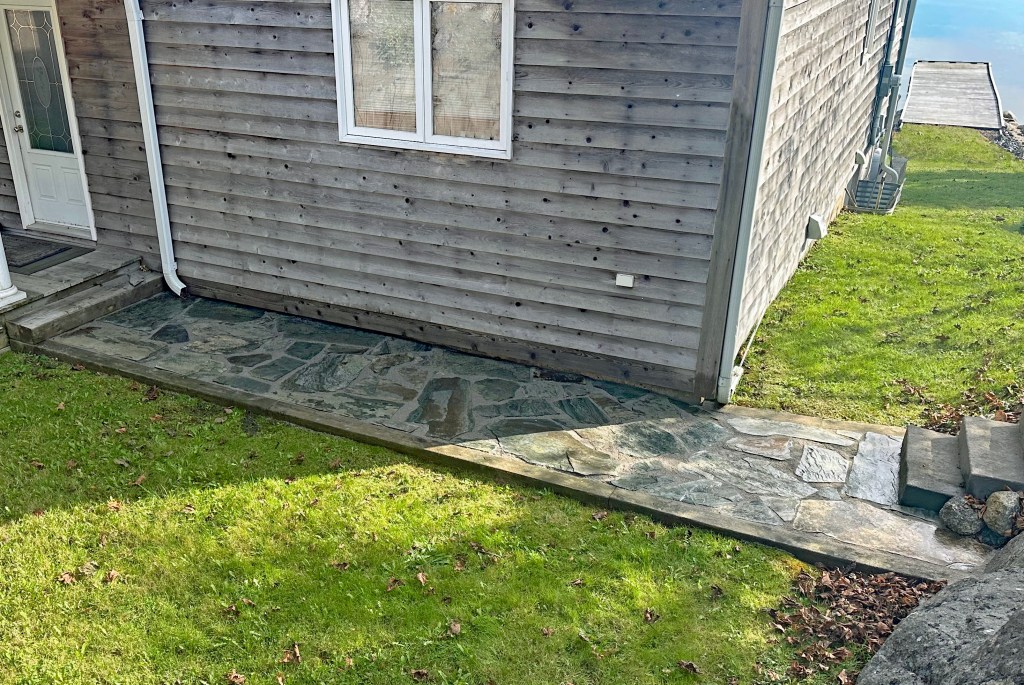
Until recently you had two choices when filling the gaps in a flagstone patio either polymeric sand or crusher dust. Polymeric sand would break down quickly and crack in the wider joints and crusher dust allowed weeds and tends to wash out. Neither of these choices were or are wrong to use they just weren’t ideal but nothing else was available.
Polymeric sand is a wonderful product that is swept into the joints dry, activated using a specific amount of water and then carefully allowed to dry and set. When used in narrow joints it creates a hard and lasting polymer that prevents weeds and looks great for years to come. I find that when used in a paver patio it performs well for at least 5 years in our climate. When used in joints over or approaching the manufactures maximum of one inch it heaves, cracks and looks pretty terrible after a year’s worth of rains and a single winter.
Since polymeric sand looks disappointing a year or so after being installed some installers opt to use crusher dust instead. Crusher dust tends to come back out of narrow joints and still allows for weeds to be established in the wider ones. While both options have been the best available in the past that is no longer the case.
All weather jointing compounds
In the last few years, a new filling product has been developed. These are called all weather jointing compounds which can fill gaps up to 5 inches. The original compound (and the one I use) is branded Easy Joint however there are other competing products available.
This product is formulated to fill joints from 3mm to 5 inches, ideally with one dimension approaching 1 inch. In other words, provided installed flagstones are cleaned out to the bottom of the stones Easy Joint is ideal for filling these areas. The technique used to install all weather jointing compounds is similar to polymeric sand or crusher dust however the conditions under which it is applied are very different.
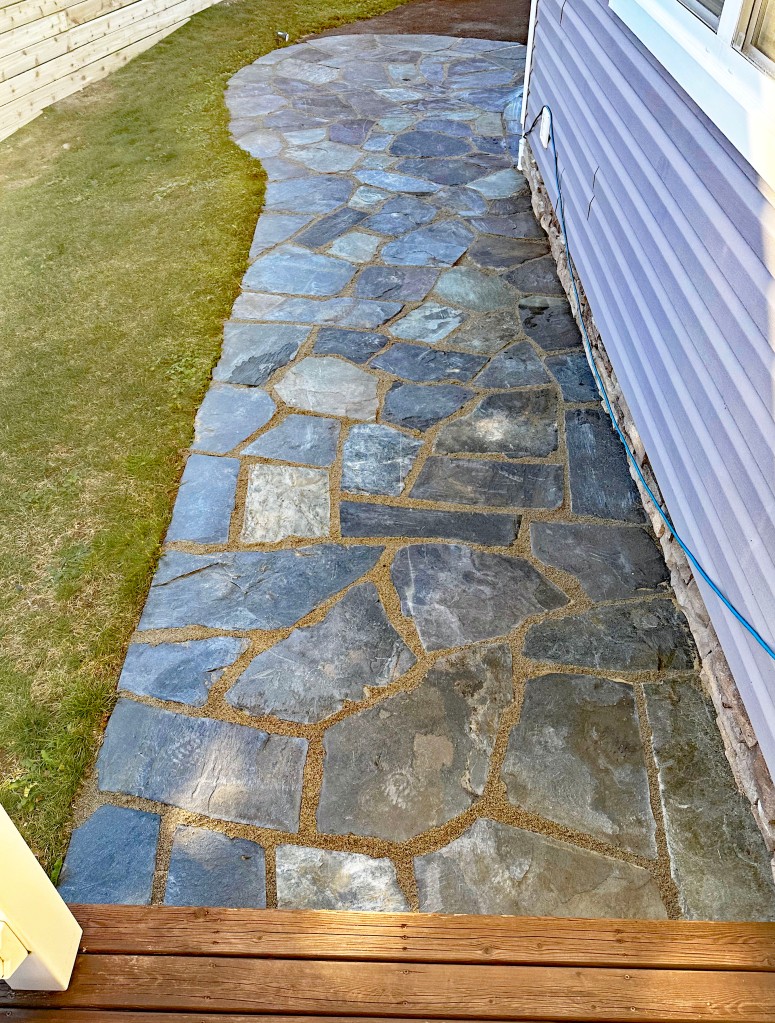
Pretty much the only drawback to newly developed jointing compounds is the cost. You pay a bit more than you would for a bag of polymeric sand and get a little less product. Flagstone, being a natural stone, has always been more expensive per square foot than most pavers however that margin has increased dramatically in the last few years. I would argue that given flagstone is a premium product it makes sense to invest in filling material that will not only look best but last longer.
Like everything all weather jointing compounds have pros and cons but in my opinion are the new best option for most flagstone applications:
Pros
-Can be applied wet/cold
-Incredibly permeable
-Freeze safe
-No Hazing
-Long-lasting
-Durable finish
-Designed for wider joints
-Does not need to be kept dry after installation while setting
-Available in several colors
Cons
-More expensive
-Unfamiliar application technique
-Temporary linseed smell lingers after installation
Recent Easy Joint installations
Flagstone walkways, patios and paths are some of the more popular choices in this area. Given the shortfalls of previous filling options there’s always one or two on the list that need to be re-done. This year I had three walkways and one patio that were looking pretty rough and needed attention. The photos in this post show the process of installing Easy Joint and making them look their best again. My polymeric sand supplier let me know that there was a new better option available for flagstone though most installers were still opting to use the familiar polymeric sand.
One property had a walkway filled with crusher dust that had gotten weedy and sunk and the other had two walkways and a patio with crumbling polymeric sand. Neither product had stood up to the test of time and honestly had aged pretty terribly. The supplier let me know that Easy Joint was newly available and was now the recommended product for natural flagstone installations. After some research, it seemed like the most appropriate choice. This product has been available for quite a bit longer in the United Kingdom and reviews suggested it would be longer-lasting than our traditional options.
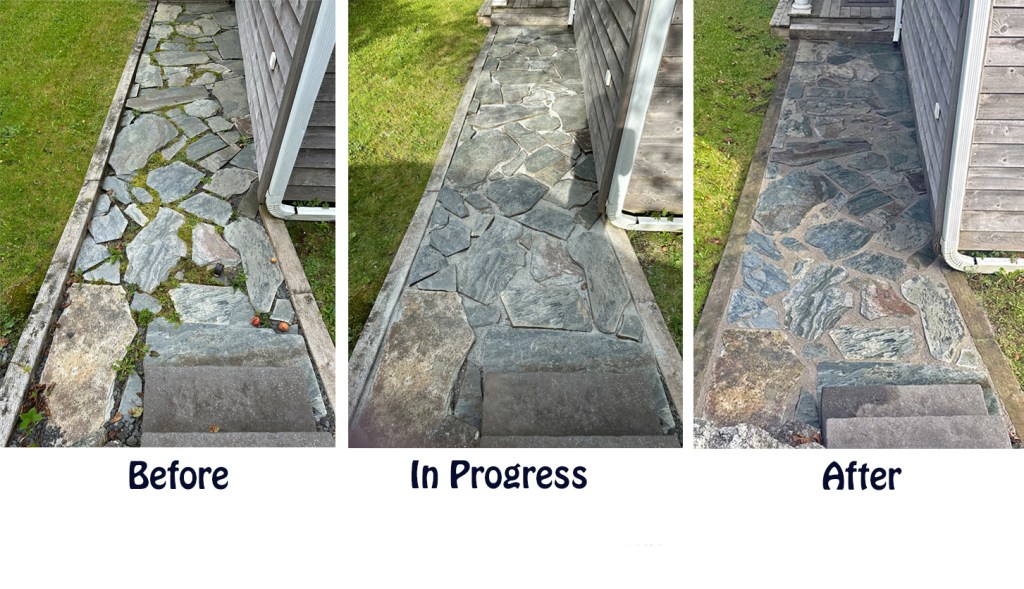
To renovate an existing flagstone installation with long-lasting results several steps must be taken:
-Pressure wash the area to break up existing joint material
-Clean joints to the bottom of stones and scrape the surface where necessary
-Lift and level any stones that have become uneven
-Add new fill material to the top of the stones following the manufacturer’s instruction
-Tamp the area
-If necessary add more fill material and tamp again
-Allow material to polymerize or set according to instructions
If you have struggled to keep your flagstone areas looking their best there is finally a long-lasting solution available. Don’t hesitate to contact us today!
 AMK Landscaping
Leave a comment