Ticks and the Lyme disease that can come along with them have become a real concern in Nova Scotia particularly on the South Shore. The reality of the trends we see reported is that certain homeowners now own properties with substantial and established tick populations. Not only can this have a real gross-out factor it can also make you want to stay indoors!
We’ve met with homeowners who have lost the enjoyment of being at their properties due to high tick numbers and are at their wit’s end. It sounds dramatic but lots of people don’t want to share their space and their bodies with a bunch of ticks, including me!
Over the last few summers, we’ve had a lot of success dramatically reducing the tick populations at problem properties using chemical and non-chemical methods.
Why we have so many ticks now
Ticks of all varieties have always found a home in Nova Scotia but in recent years they are more numerous and common outside of just grassy meadows and the woods. More and more homeowners are finding them on their lots and even in places like city parks, but why is that?
One big reason is climate change. The first way climate change impacts tick populations is the rising winter temperatures we see. Ticks can survive very low temperatures but they do start to die off at temperatures below -12 C. However, they don’t all magically die at that temperature the longer the mercury stays below that number the fewer ticks will emerge in the spring.
Our winters are shorter with fewer days below -12 C and fewer consecutive days are spent at those low temperatures. That means more ticks are making it through the shorter winters and coming out in the spring. Our longer summers give more days for ticks to be active. This increases their opportunities for both feeding and breeding leading to more ticks going into the fall. And so the tick problem gets worse year after year. These ticks then face more competition and then move out into new areas like your backyard.
Deer are the natural carriers for the black-legged ticks that can carry Lyme disease but small rodents can carry them too. Deer populations are booming especially in certain neighborhoods where they are protected from hunting pressures. Deer have also proven to be very good at adapting to living with humans. They can mow down hostas and tulips in whole neighborhoods and even move on to plants they don’t usually eat like rhododendrons. Not only that they bring black-legged ticks with them.

I’ve noticed that the neighborhoods with the worst deer problems are all isthmuses and points with narrow entrance roads. So some pretty expensive real estate. In these neighborhoods, there is no hunting pressure from surrounding woods and the deer, though pretty, can cause a lot of issues. I know certain towns in Nova Scotia have done culls in the past but never in targeted neighborhoods that I am aware of. It seems one person sees them as a disease carrying scourge and the next person thinks every deer is Bambi’s mom. Then these two people buy houses next to each other.
Ticks and Lyme disease
It doesn’t matter if you are looking at a black-legged tick or not they still give you the ick! It’s totally normal to not want to see them and think that every tick isn’t welcome at your home. Even though the black-legged tick is the only one known to cause Lyme disease other ticks can still be a vector for disease.
That said, ticks don’t automatically mean Lyme disease and only about 20% of black-legged ticks are infected with Lyme in Nova Scotia. Even if a tick attaches to you and is infected with Lyme it needs to be attached and feeding for about 24 hours before you can be infected. As gross as it is the mouthparts alone if left attached are not capable of transmitting Lyme to humans. So a thorough tick check when you come indoors is effective in preventing infection.
In the last few years awareness of ticks and Lyme disease has gotten a lot better. You can see a pharmacist in most cases if you’ve gotten a tick bite and get prescribed antibiotics to ward off infection. Finally despite what some real housewives would have you believe there is no good scientific evidence that long-term chronic Lyme is a real medical condition. When a diagnosis is significantly delayed symptoms can get worse and longer term antibiotic treatment may be necessary but even in those cases, symptoms clear up in a matter of months.
So as gross as they are and Lyme disease is a serious condition, the worst-case scenario of getting infected perhaps isn’t as dire as we might think.
Options for tick control
The realities of a changing climate and the adaptability of carrier species mean booming tick populations are a reality going forward. If you live in a rural setting in an area where deer or mouse populations boom there is a very good chance tick populations on your property will establish themselves. In the neighborhoods with the most pressure from ticks, their numbers can still be greatly reduced, if not eliminated from a property.
Organic control
The owners of one property wanted to regain enjoyment of their property without the use of chemicals which we were able to do. The property is quite wooded and on a point with many, many very tame deer. The homeowners said that every time the kids played outside or they even brought wood in for the fireplace they would find ticks on them and they hated it!
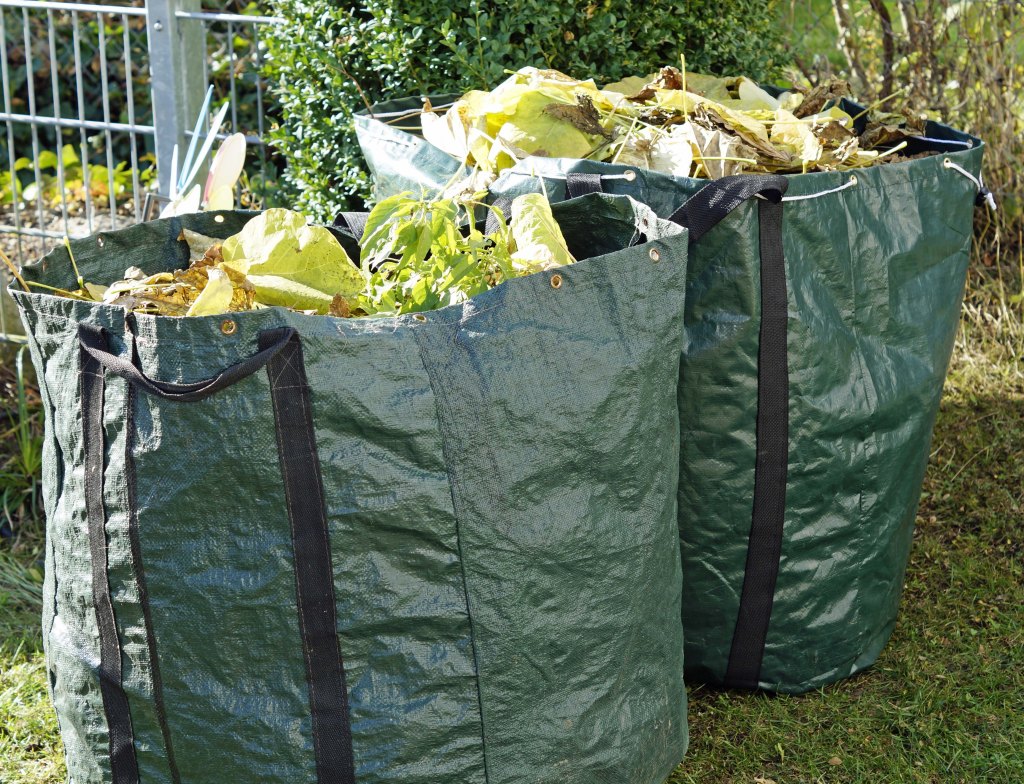
We started by walking the property and making a plan. We wanted to reclaim large sections where you could reasonably expect you could walk without encountering a tick, although it’s always safest to do a check! At the end of a year of active management, they hadn’t encountered a single tick. Admittedly there were a lot of things that should have been attended to to reduce the tick population but hadn’t been dealt with because of, you guessed it, the ick of the tick.
Here’s how we functionally eliminated the ticks from the property in a year:
Removed 5 tons of old-cut softwood log piles from around the property
Stacked piles of firewood (covered in leaves) into a dry woodshed
Removed leaves from the used areas of the property
Removed leaves from wooded areas for 12 ft surrounding the used areas
Installed deer fencing perimeter
Widened connecting paths with maintained gardens surrounding 20 ft
Removed tall weeds in these areas
Removed a dense area of tall needled reeds
Maintained regular lawn-cutting
Thinned existing gardens and installed mulch and barriers
Cleared bottom branches and dead growth from established shrubs
Opened up or eliminated dense landscaping where dark, damp areas existed
Picked up all leaves weekly as they fell in the fall
Removed all this material from the property to an approved site
Taken together these steps aim to make the property less accessible and attractive to the deer and provide less refuge for the ticks to survive and thrive. Clearing the bottom branches of shrubs (you could also cover with burlap) eliminates a food source for the deer and the perimeter fencing bars them from the property.
Keeping the grass cut short consistently creates areas where the ticks are not comfortable. Doing a good job picking up leaves and keeping spaces in gardens clear means that ticks don’t have warm, wet insulated areas to hide. By keeping the used areas and the paths connecting them very clear the homeowners can move around the property without encountering ticks. Getting these areas clean before winter also means that ticks won’t have insulated areas to escape the coldest temperatures of winter and keep fighting the problem year-round.
These efforts were successful and no one met a single tick from last July going forward, although we all kept doing our checks. Reducing a tick population dramatically without chemical treatment is very possible but it is a lot of work and an ongoing process!
Inorganic control
That said using chemicals isn’t always a bad thing especially when treating for ticks. Since so many of our ticks carry Lyme, upwards of 20% in Nova Scotia, having many black-legged ticks on your property does make it less useable and threatens one’s health. Chemical treatments to control tick populations are not frivolous or for aesthetic reasons.
Permethrin, the recognized insecticide for ticks is also not a ‘bad chemical.’ It has long been approved for use as a topical medication in humans to treat scabies and lice. It is recognized as safe for use in humans above the age of 2 months and during pregnancy,
It can be effectively used on vegetation where ticks have been seen or preventatively sprayed around a property. It is recommended that people apply permethrin to their clothes when they are in high tick areas. Permethrin can also be added to cotton balls and then placed into cardboard tubes on a property. The cotton is then taken to rodent nests where it eliminates ticks on rodent carriers. I would use permethrin to treat my property if I had a serious problem with ticks.
It is almost always possible to do something about ticks on a property with or without using chemicals. If you want to start getting the tick population under control on your property we would love to help!
 AMK Landscaping
Leave a comment